

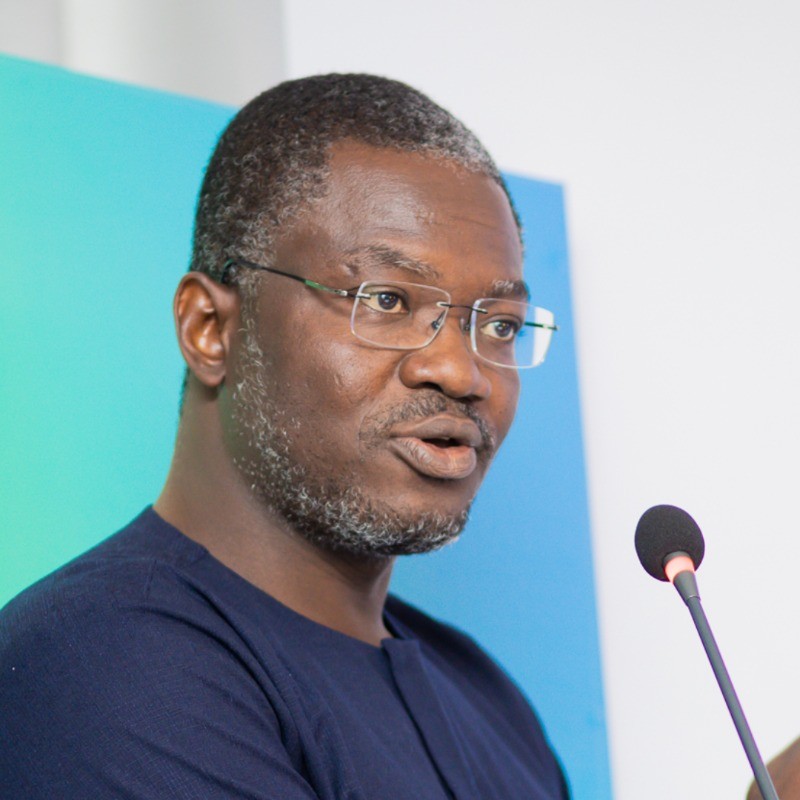
Before I founded Alleviate, I spent more than fifteen years building digital systems for organizations working across 60+ countries. I worked with UNICEF programs and World Bank projects. I worked with national systems for governments and with grassroots organizations running on almost nothing. I sat in offices in capitals and under trees in villages, usually looking at the same problem from different ends.
Over those years I noticed something I could not unsee. The strongest organizations were rarely the best funded. They were the best organized. They knew their mission and could say it in one sentence. They could put their hands on their evidence. Their systems held up when a funder asked a hard question. Funding followed that readiness far more often than readiness followed funding.
This year we tested that observation at scale. We built the NGO Readiness Assessment and opened it to the sector. As of this writing, 388 organizations across 35 countries have completed 400 assessments. Founders and executive directors are seven in ten of the respondents. Some run teams of two. Some sit inside large international networks. The spread of geography, size, and mission is exactly what you would want if you were trying to learn something true about the sector rather than about one corner of it.
Here is the clearest pattern in the data. Mission clarity is almost never the problem. It is the highest scoring pillar in the dataset at 4.1 out of 5, and program design sits just behind it at 4.0. The two lowest pillars tell the real story. Positioning with stakeholders scores 3.4. Evidence, data, and storytelling scores 3.6. In other words, the sector is strong at doing the work and weak at being seen doing it. Evidence lives in spreadsheets, in inboxes, and in the memory of whoever wrote the last report. When a funder asks what changed, the honest answer in too many organizations is that assembling it will take three weeks and a small miracle.
That gap used to be survivable. It is becoming less so. Funding is shifting toward outcomes. Compliance expectations are rising on every continent we assessed. Smaller teams are being asked to prove more with less. The organizations that can show change will win the next decade. The organizations that can only show activity will struggle, and it will have nothing to do with the quality of their work. That is the part I find unacceptable, because I have seen too much excellent work go unfunded for lack of a system to make it visible. And the sector knows it. When we asked respondents whether they wanted to explore next steps, 96 percent said yes or asked to see more.
So what does readiness actually mean? In our framework it rests on five pillars: clarity of mission and strategy, how well you know and position yourself with your stakeholders, the design of your programs, your evidence, data, and storytelling, and the systems and governance underneath all of it. None of these requires a large budget. Every one of them can be measured, built, and improved. That is the point. Readiness is not a trait some organizations are born with. It is a practice.
This is why we built Alleviate the way we did. Fundraising tools tell you who gave. Alleviate tells you what changed. We call the category ImpactOps: the operating layer that turns the daily work of a civil society organization into evidence, accountability, and time returned to the mission. From busywork to better work is not a slogan we wrote first and justified later. It is the shortest description of what we watched hundreds of organizations need.
If you lead an NGO, a nonprofit, or a civil society organization, start by knowing where you stand. The NGO Readiness Assessment is free at readiness.alleviate.org. It takes a short sitting, and it will show you where you are strong and what to strengthen first across all five pillars. Nearly four hundred organizations have already used it to see themselves clearly. The work you do deserves to be visible. Readiness is how it gets seen.
Robert Okine is the Founder and CEO of Alleviate Technologies and Executive Director of the Alleviate Foundation. He is a UN SDG Pioneer for Digital Innovation and Inclusion and has spent fifteen years building digital systems across 60+ countries for UNICEF, UNDP, USAID, the World Bank, and FAO.